Recognizing the Deaf Community as an Ethnic Group
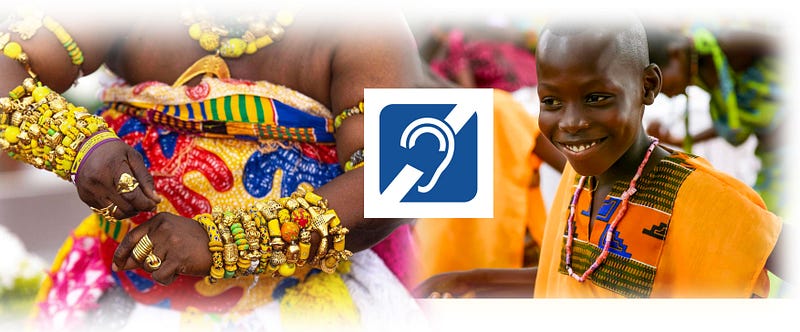
Ghana, a vibrant multilingual country of cultures and languages, prides itself on its rich ethnic diversity. Each group contributes to the nation’s cultural mosaic, from the Akan to the Ewe, Dagbani, and beyond. However, one significant community often overlooked in the discourse on ethnic groups and indigenous languages is the Deaf community. It’s time to acknowledge that Ghanaian Sign Language (GSL) should be recognized as an indigenous language, and the Deaf community as an ethnic group within Ghana.
The Case for Ghanaian Sign Language (GSL) as an Indigenous Language
Language is the cornerstone of culture and identity. For a newborn in an Akan family, the first language introduced is Akan, and similarly, an Ewe or Dagbani family introduces Ewe or Dagbani to their child. This initial language not only serves as a communication tool but also immerses the child in their cultural heritage. In the same vein, when a Deaf couple welcomes a new child, the first language that child is exposed to is GSL. Just as Akan, Ewe, or Dagbani becomes the mother tongue for hearing children, GSL becomes the mother tongue for children born to Deaf parents.
Recognizing GSL as an indigenous language involves more than just acknowledging its use; it requires recognizing the rich cultural heritage and unique identity it embodies. GSL is not merely a mode of communication but a vessel of the Deaf community’s history, norms, beliefs, and shared experiences. This language is a living testament to the Deaf community’s resilience and adaptation, weaving a narrative as integral to Ghana’s cultural fabric as any spoken language.
The Deaf Community as an Ethnic Group
In Ghana, ethnic identity is deeply tied to language and cultural practices. A person’s ethnicity is often defined by the language spoken at home, the customs followed, and the community they belong to. By this definition, the Deaf community, united by the use of GSL, shared cultural practices, and a common history, qualifies as an ethnic group.
Deafness is not merely a disability but a distinct cultural identity. The Deaf community has its own norms, traditions, and values that distinguish it from the hearing world. Just as the Akan, Ewe, or Dagbani people take pride in their cultural heritage, so do members of the Deaf community. They participate in unique cultural events, preserve their own folklore, and navigate the world with a shared understanding that is rich and unique.
The Multilingual Landscape of Ghana
Ghana’s multilingual landscape is a source of national pride. With over 70 languages spoken, the country is a melting pot of cultures and traditions. The official language, English, serves as a unifying medium in government, education, and business, a legacy of the British colonial era. Yet, this colonial legacy should not overshadow the importance of indigenous languages in maintaining cultural diversity.
In this context, recognizing GSL as an indigenous language aligns with Ghana’s commitment to preserving its cultural heritage. It also honors the principle of inclusivity, ensuring that every community, regardless of whether their language is spoken or signed, has a place in the national narrative.
Embracing a New Ethnic Identity
The recognition of the Deaf community as an ethnic group and GSL as an indigenous language would be a progressive step towards inclusivity and diversity. It would validate the lived experiences of Deaf individuals and ensure that their cultural contributions are acknowledged and celebrated. This move would also foster a greater sense of belonging among Deaf individuals, affirming their identity within the broader Ghanaian society.
Such recognition would necessitate policy changes, such as incorporating GSL into the educational curriculum and providing interpretation services in public and governmental institutions. It would also involve promoting awareness about the Deaf community’s cultural contributions, thereby enriching Ghana’s cultural tapestry.
In embracing the Deaf community as an ethnic group and recognizing GSL as an indigenous language, Ghana can take a bold step towards true inclusivity. This move would not only honor the cultural richness of the Deaf community but also reinforce Ghana’s commitment to diversity. Just as the languages and cultures of the Akan, Ewe, and Dagbani are cherished and preserved, so too should be the language and culture of the Deaf community. By doing so, Ghana will not only enrich its cultural heritage but also pave the way for a more inclusive and harmonious society.
What are your thoughts? Share your views or opinions in the comments below. Please Like, Share and Follow.
Comments
Post a Comment